
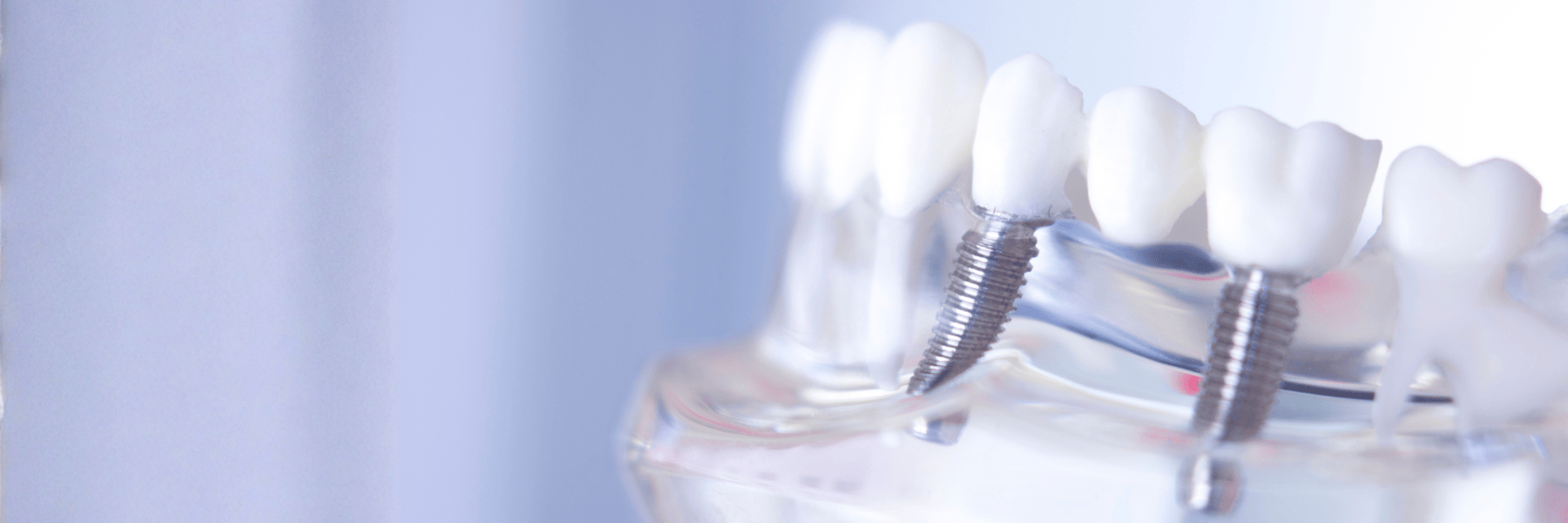
Dental Implants
 During the last 20 years, dental implants have become a desirable alternative to other methods of replacing missing teeth. Excellent success rates and a range of available options give dentists a variety of new ways to treat and replace lost teeth.
Your dentist can evaluate your case and tell you if you are a candidate for dental implants. Structurally, a dental implant is a titanium-based cylinder that replaces the missing tooth root. After a period of time, other parts are placed on the implant to enable your dentist to eventually place a crown (cap) on the implant. Implants can also be used to support full or partial dentures, dramatically improving denture retention and stability.
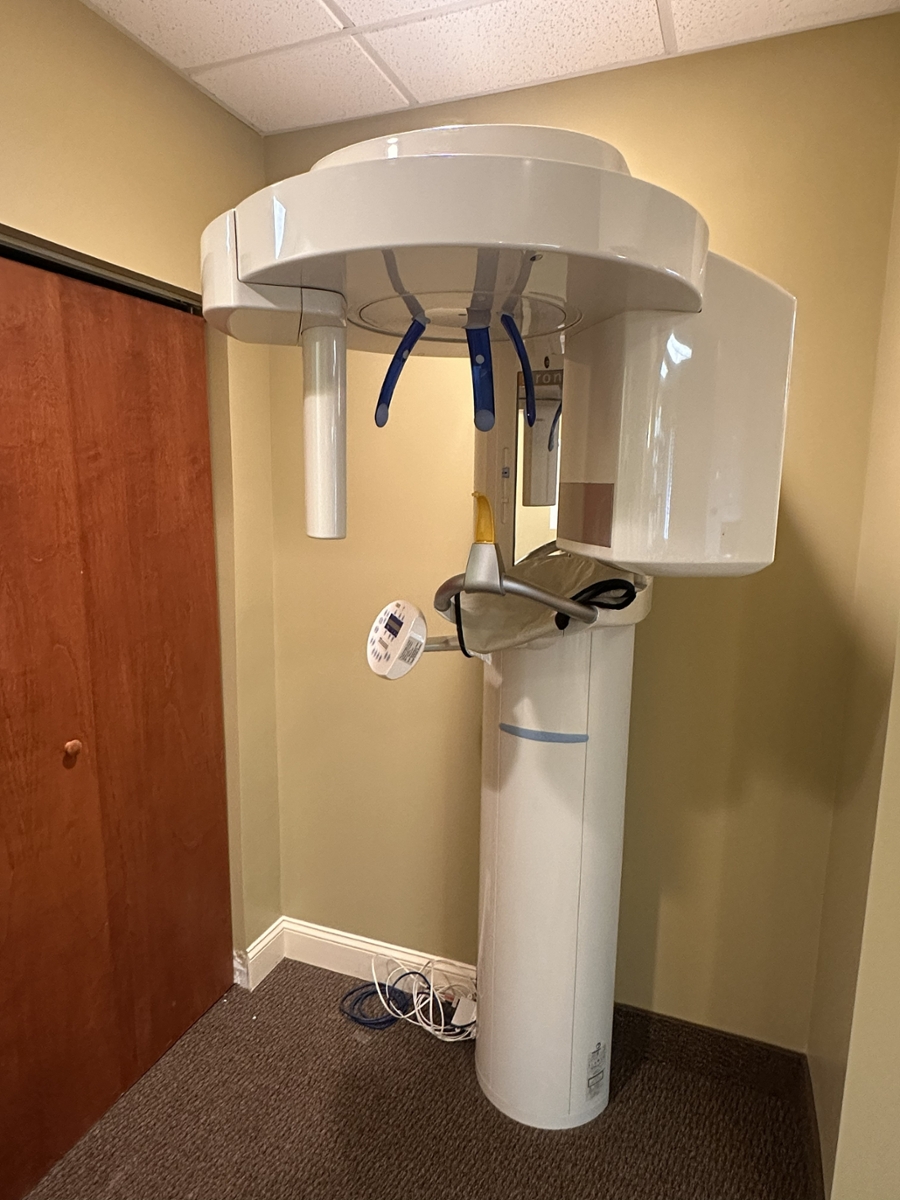
Most patients with adequate bone mass can have implants, although it varies among individuals. Typically an x-ray and CT-scan are performed to determine if you have enough bone to place the implant, as well as to verify the size and kind of implant that should be placed.
Benefits of Dental Implants
When compared to fixed bridges and removable dentures supported by other teeth or gum tissue, implants offer numerous advantages:
- Better esthetics: Since implants are placed in the gum similar to the way a natural tooth is supported, they offer a more realistic and natural look compared to other alternatives.
- Reduction of bone resorption: When a tooth is lost, the supporting bone structure gradually recedes. Placing an implant in that empty space significantly reduces the speed of bone resorption and provides stability for this valuable tissue.
- Retention: Patients who have experienced removable full or partial dentures know that keeping their dentures in place is always a challenge. Dental implants offer a great improvement to denture retention for all patients. In some cases the denture can be secured to a group of implants with special screws that stabilize the denture completely.
- Preserving natural tooth structure: Often the preferred method of replacing a single missing tooth is a bridge. Bridges require extra preparation for the surrounding teeth to ultimately connect 3 or more teeth. This negatively impacts your health by making the task of retaining your teeth more difficult and by often requiring the destruction of existing tooth structure to create room for the new bridge. An implant is mostly an independent unit and does not negatively affect the adjacent teeth.
Do you live in or around Hockessin? For more information please call our office to schedule your consultation.
Frequently Asked Questions
The American Association of Oral and Maxillofacial Surgeons (AAOMS) is a valuable resource for learning about oral and maxillofacial surgery, providing educational information on surgical procedures, facial trauma, dental implants, wisdom teeth removal, and patient care in oral surgery.
The American College of Prosthodontists (ACP) is a valuable resource for learning about prosthodontics, offering educational information on restorative dental treatments, dental implants, crowns, dentures, cosmetic dentistry, and advanced oral rehabilitation procedures.
Our Team
-

Dan Matthews DMD
General and Cosmetic Dentist
Dr. Daniel E. Matthews graduated for Georgetown University and received his DMD from the University of Pennsylvania in 2005. He completed his General Practice Residency with Christiana Care Health System in June 2006. Dr. Matthews is currently a member of the American Dental Association, Delaware State Dental Society, Academy of General Dentistry and American Academy of Cosmetic Dentistry.
Why Choose Matthews Dental Associates
From the front office to the exam room, Matthews Dental Associates is made up of highly-experienced dental and healthcare professionals who take your oral health very seriously. Using state-of-the art ...
Read More